Your Melanocytes Need Fuel
Melanin is the pigment that gives your skin its color when you tan. It is produced by specialized cells called melanocytes, and those melanocytes need specific nutrients to do their job efficiently. If your diet is missing key vitamins and minerals, your body literally cannot produce melanin as well — even if you are getting plenty of sun. You will tan slower, less evenly, and the color will not be as rich.
Think of it like trying to build a house without enough building materials. The blueprint is there (your DNA), the workers are there (your melanocytes), but if the raw materials are limited, the result is going to be underwhelming. Feed your melanocytes the right nutrients and they will reward you with faster, deeper, more beautiful color.
Here is exactly what your body needs and which foods deliver it.
Copper-Rich Foods: The Melanin Essential
Copper is the single most important mineral for melanin production, and most people have never heard this. Melanin synthesis is controlled by an enzyme called tyrosinase, which converts the amino acid tyrosine into melanin. Tyrosinase needs copper to function — without enough, melanin production slows no matter how much sun you get.
Dark chocolate (70% cacao or higher). One ounce provides about 25% of your daily copper needs. This is not an excuse to eat an entire chocolate bar (though we would not blame you), but a square or two of quality dark chocolate daily is genuinely supporting your tan. The flavonoids in dark chocolate also have antioxidant properties that help protect your skin from UV damage. Win-win.
Cashews and almonds. A quarter cup of cashews provides about 30% of your daily copper. Almonds are close behind. Keep a bag in your backpack for a tan-boosting snack. Both nuts also provide vitamin E (skin protector) and healthy fats that help your body absorb other tan-supporting nutrients.
Sunflower seeds. Easy to snack on, affordable, and packed with copper, vitamin E, and selenium. Toss them on salads, add them to trail mix, or eat them straight from the bag. An underrated tanning superfood.
Lentils and chickpeas. One cup of cooked lentils delivers about 50% of your daily copper. Chickpeas are similar. These are cheap, versatile, and incredibly nutrient-dense. Hummus (made from chickpeas) counts too — so if you are eating hummus with baby carrots, you are hitting copper AND beta-carotene at the same time. Tanning snack of the year.
Vitamin A Foods: Fuel for Your Melanocytes
Vitamin A is essential for the growth and function of melanocytes. Without adequate vitamin A, melanocyte activity decreases, which means your skin responds less effectively to UV exposure and produces less melanin per session.
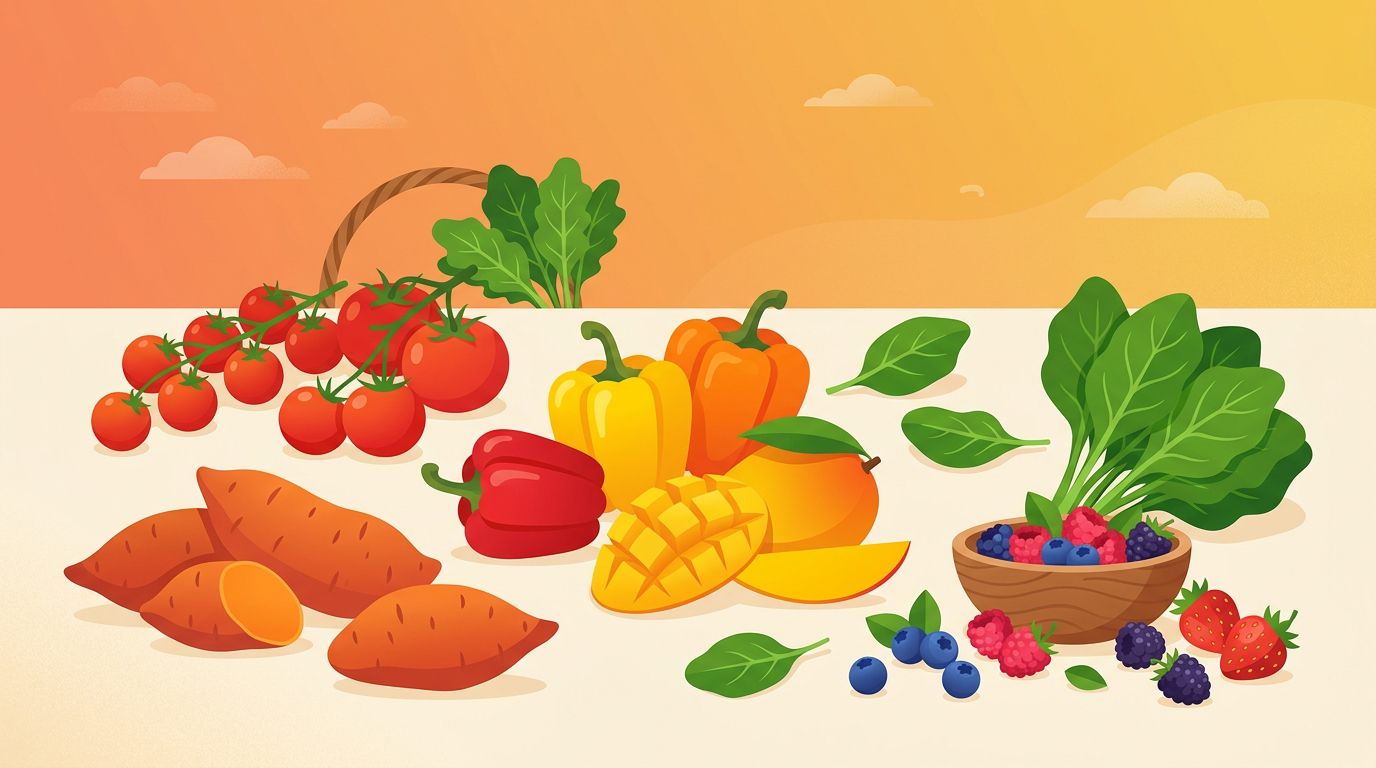
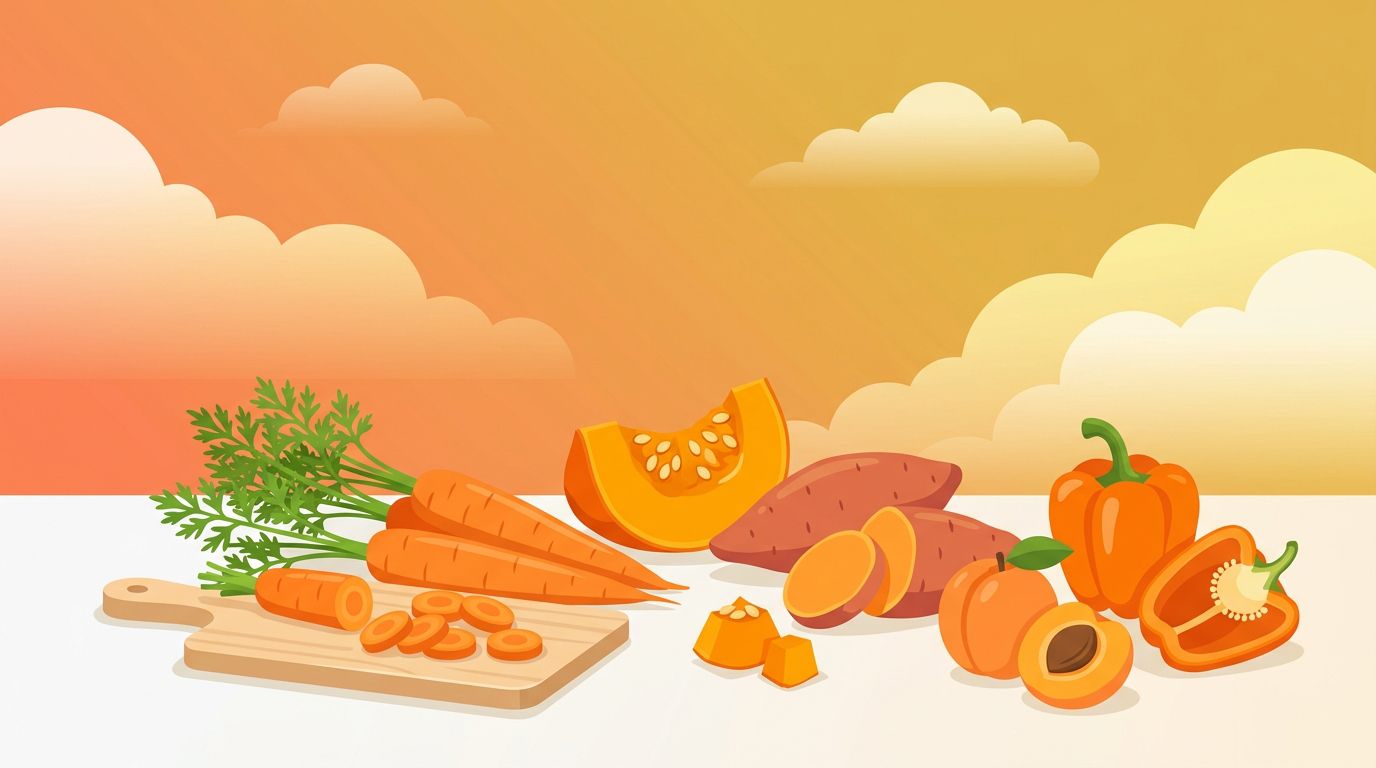
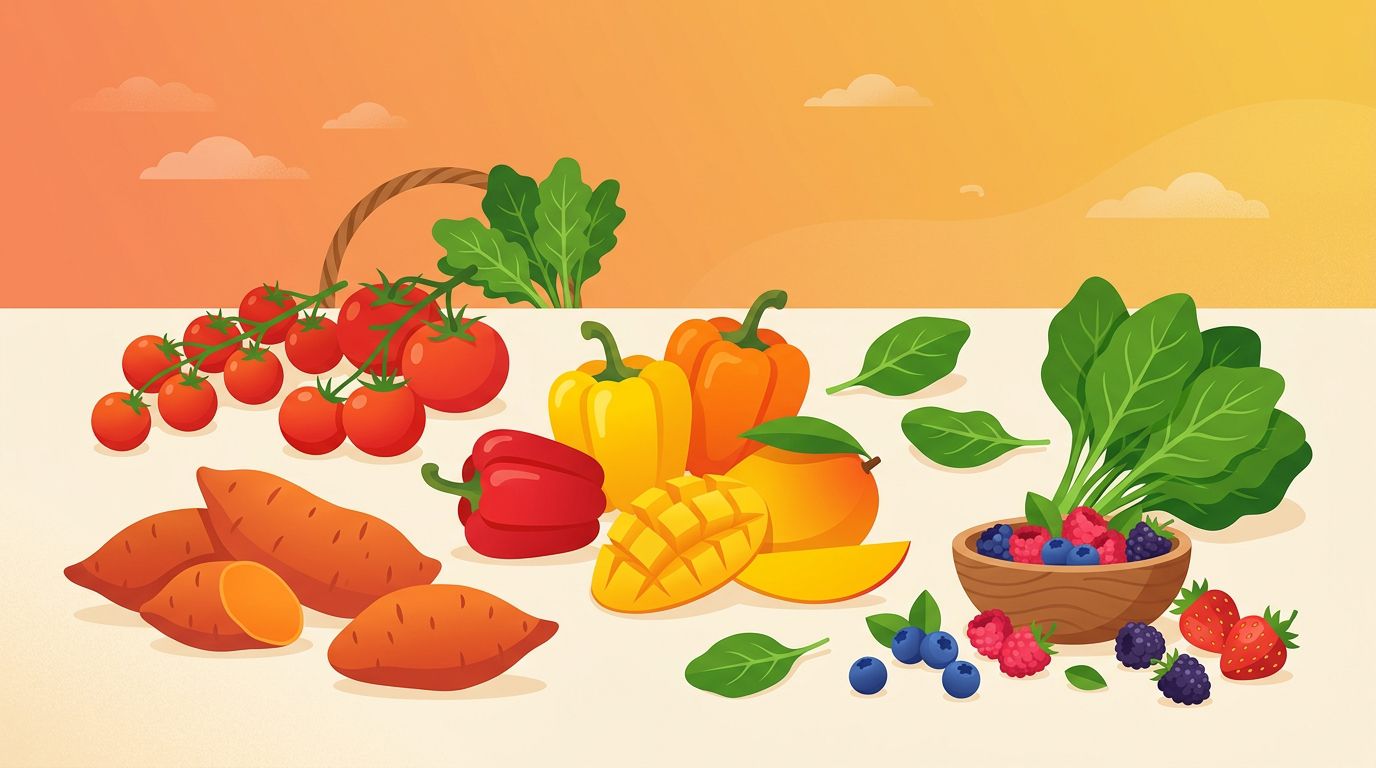
Sweet potatoes are the undisputed champion. One medium sweet potato provides over 400% of your daily vitamin A in the form of beta-carotene. Your body converts beta-carotene to vitamin A as needed, so there is basically no risk of overdoing it from food sources. Plus, the beta-carotene itself deposits in your skin and creates that golden carotenoid glow we talked about.
Carrots are the second most efficient source. One large carrot gives you over 100% of your daily vitamin A. Raw, cooked, juiced — all count.
Eggs are interesting because they contain preformed vitamin A (retinol), which your body can use immediately without needing to convert it. Two eggs at breakfast give you about 15-20% of your daily vitamin A plus protein, healthy fats, and other nutrients your skin loves.
Other solid vitamin A sources: cantaloupe, mango, dried apricots, butternut squash, and red bell peppers. Pretty much anything bright orange or deep green is going to be rich in beta-carotene and therefore vitamin A. For a full list, see our complete tan-boosting foods guide.
Vitamin C Foods: Protect and Support
Vitamin C does not directly produce melanin, but it plays critical supporting roles. First, it is essential for collagen production — collagen keeps your skin firm, smooth, and healthy. Healthy skin tans better and holds color longer. Second, vitamin C is a powerful antioxidant that protects melanocytes from oxidative stress caused by UV exposure. You want your melanocytes healthy and functioning optimally, and vitamin C helps ensure that.
Bell peppers are the surprise MVP here. One medium red bell pepper provides about 170% of your daily vitamin C — more than an orange. Add sliced bell peppers to salads, stir-fries, or eat them raw with hummus (there is that copper combo again).
Citrus fruits — oranges, grapefruits, lemons, limes — are the classic vitamin C sources. Drink fresh OJ, add lemon to your water, eat a grapefruit with breakfast. Consistent, daily vitamin C intake is what matters.
Strawberries pack about 150% of your daily vitamin C per cup. Kiwi fruit is even more concentrated. Both make excellent smoothie ingredients — check our tan-boosting smoothie recipes for specific ideas.
Vitamin E Foods: Your Skin's Protector
Vitamin E is a fat-soluble antioxidant that specifically concentrates in your skin cells, where it protects against UV-induced free radical damage. When your skin is exposed to UV, free radicals are generated that can damage cell membranes and DNA. Vitamin E neutralizes these free radicals, helping your skin cells (including melanocytes) stay healthy and functional.
Almonds are the single best food source. A quarter cup provides over 50% of your daily vitamin E. We already mentioned almonds for copper — so they are pulling double duty for your tan.
Avocado delivers vitamin E plus healthy monounsaturated fats that improve absorption of fat-soluble nutrients (beta-carotene, vitamin E itself, and lycopene). Avocado toast is not just a lifestyle choice — it is a tanning strategy.
Spinach is a triple threat: vitamin E, vitamin A (as beta-carotene), and iron. Iron supports oxygen delivery to skin cells, including melanocytes. Blend spinach into smoothies, add it to salads, or sautee it with olive oil (fat for absorption) as a side dish.
Melanin vs Melatonin: They Are NOT the Same
This confusion comes up constantly, so let us clear it up once and for all:
Melanin = the pigment that gives your skin, hair, and eyes their color. It is produced by melanocytes in response to UV exposure. Melanin is what makes you tan. It is what this entire article is about.
Melatonin = a hormone produced by your pineal gland that regulates your sleep-wake cycle. It has absolutely nothing to do with skin color. Taking melatonin supplements will help you sleep. They will NOT help you tan. At all. Not even a little bit.
The names are annoyingly similar, which is why people confuse them. But they are completely different substances with completely different functions. If anyone tells you melatonin helps you tan, they are confusing it with melanin. Now you know.
What About Supplements?
The question everyone asks: should you take supplements to boost melanin production? Here is the honest answer:
Food first, always. Whole foods contain nutrients in their natural form along with cofactors and fiber that enhance absorption. A sweet potato is going to deliver more usable beta-carotene than most supplements because your body evolved to extract nutrients from food, not pills.
A basic daily multivitamin is fine. If you are concerned about gaps in your diet (especially copper, which is easy to be low on), a standard multivitamin covers the basics. Nothing fancy needed.
Skip the expensive "tanning pills." There are supplements marketed specifically for tanning that charge premium prices for basic vitamins you could get from food or a cheap multivitamin. Most of them are just beta-carotene, vitamin C, and vitamin E in a fancy bottle with a markup. Save your money and eat a carrot.
NEVER take melanotan. It is an unregulated synthetic peptide with serious health risks — nausea, elevated blood pressure, dangerous mole changes. The food approach takes a few weeks longer but does not involve injecting sketchy substances from the internet.
Your Melanin-Boosting Grocery List
Here is a simple shopping list that covers all the bases: dark chocolate (70%+ cacao), almonds or cashews, sunflower seeds, sweet potatoes, carrots, eggs, bell peppers (red or orange), oranges or grapefruit, strawberries, avocado, spinach, lentils or canned chickpeas. Total cost at any grocery store: roughly $20-25. That is 1-2 weeks of melanin-boosting nutrition for less than the price of a fancy self-tanner.
The Timeline: When to Expect Results
Start eating these foods consistently and you will notice changes on this timeline: 1-2 weeks: skin feels healthier, more hydrated, smoother to the touch. 3-4 weeks: visible warmth in skin tone from beta-carotene deposits. Your tanning sessions start producing slightly richer color. 6+ weeks: full effect — your melanocytes are well-fueled, your skin has a golden carotenoid base, and your tans build faster and look better than before. If you are a picky eater and struggling with all of this, we have a picky eater tanning diet guide that makes it way easier.
Safety note: Feeding your melanocytes the right nutrients supports healthier, more efficient tanning, but it does not replace sun protection. Always wear SPF 30 minimum, limit your exposure time, and monitor UV levels. TanAI combines UV tracking with personalized session timing so your well-nourished skin gets exactly the right amount of sun. Download TanAI and pair smart nutrition with smart tanning for the best results of your life.