Your Diet Is a Tanning Secret Weapon
What if the secret to a better tan is not just about how long you spend in the sun, but about what you eat? This is not some wellness-influencer theory. This is backed by real research from multiple universities. Certain foods contain nutrients that literally change the color of your skin, boost melanin production, and help your tan develop deeper and last longer. And the best part? The effect stacks with your sun tan to create the most gorgeous, natural-looking golden glow you have ever had.
Researchers at the University of Nottingham found that people who ate more carotenoid-rich fruits and vegetables developed a noticeable golden glow, and others actually rated it as MORE attractive than a regular suntan. Let that sink in. The food glow tested better than a sun glow. Now imagine combining both.
How Food Actually Changes Your Skin Color
Here is the science in plain English. Carotenoids are pigments found in colorful fruits and vegetables. When you eat enough of them consistently, they get absorbed into your bloodstream and deposited directly into the outer layer of your skin (the epidermis). Over 3-4 weeks of consistent intake, these pigments create a warm, golden undertone that is visible to the naked eye.
This is completely separate from melanin, which is the pigment your skin produces in response to UV exposure. Carotenoid glow and melanin tan are two different types of pigmentation, and when they combine, the result is a richer, deeper, more dimensional color than either one alone. It is like using two different highlighters on the same assignment. Both add something unique.
Other nutrients matter too. Omega-3 fatty acids keep your skin hydrated and supple, which helps it tan more evenly and hold color longer. Lycopene (a specific carotenoid found in tomatoes) has been shown to reduce UV damage by up to 33%, protecting your skin cells so your tan lasts instead of peeling off. And vitamin E supports skin repair and recovery after UV exposure.
Beta-Carotene Foods: The Golden Glow Crew
Beta-carotene is the star of the show. It is the most powerful carotenoid for changing skin color, and it is found in basically every orange and deep-yellow food.
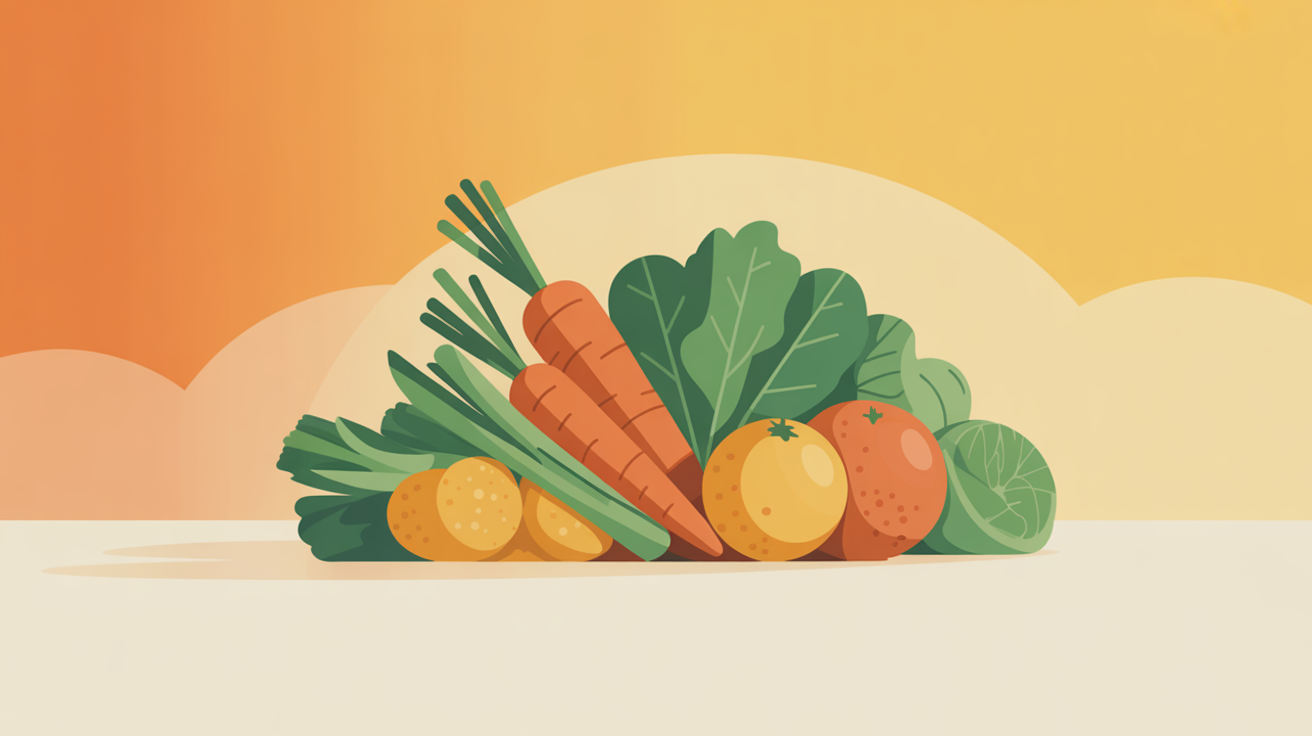
Carrots: The OG tan food. Loaded with beta-carotene. One medium carrot has about 5,000 mcg, which is a significant amount. Cooking actually makes the beta-carotene more absorbable because it breaks down the cell walls. So cooked carrots, carrot soup, and carrot juice are even more effective than raw. Adding a little fat (olive oil, butter) boosts absorption further since beta-carotene is fat-soluble. Read our deep dive on whether eating carrots helps you tan.
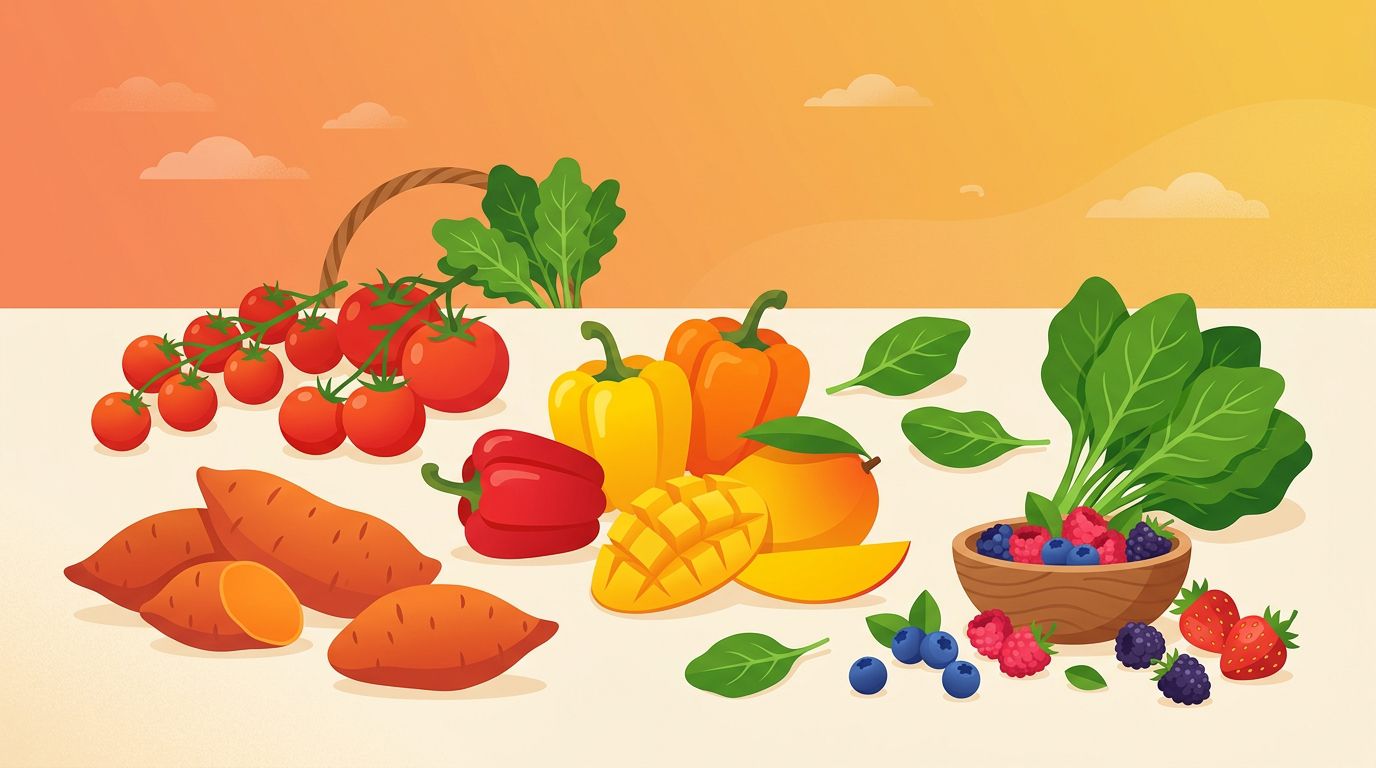
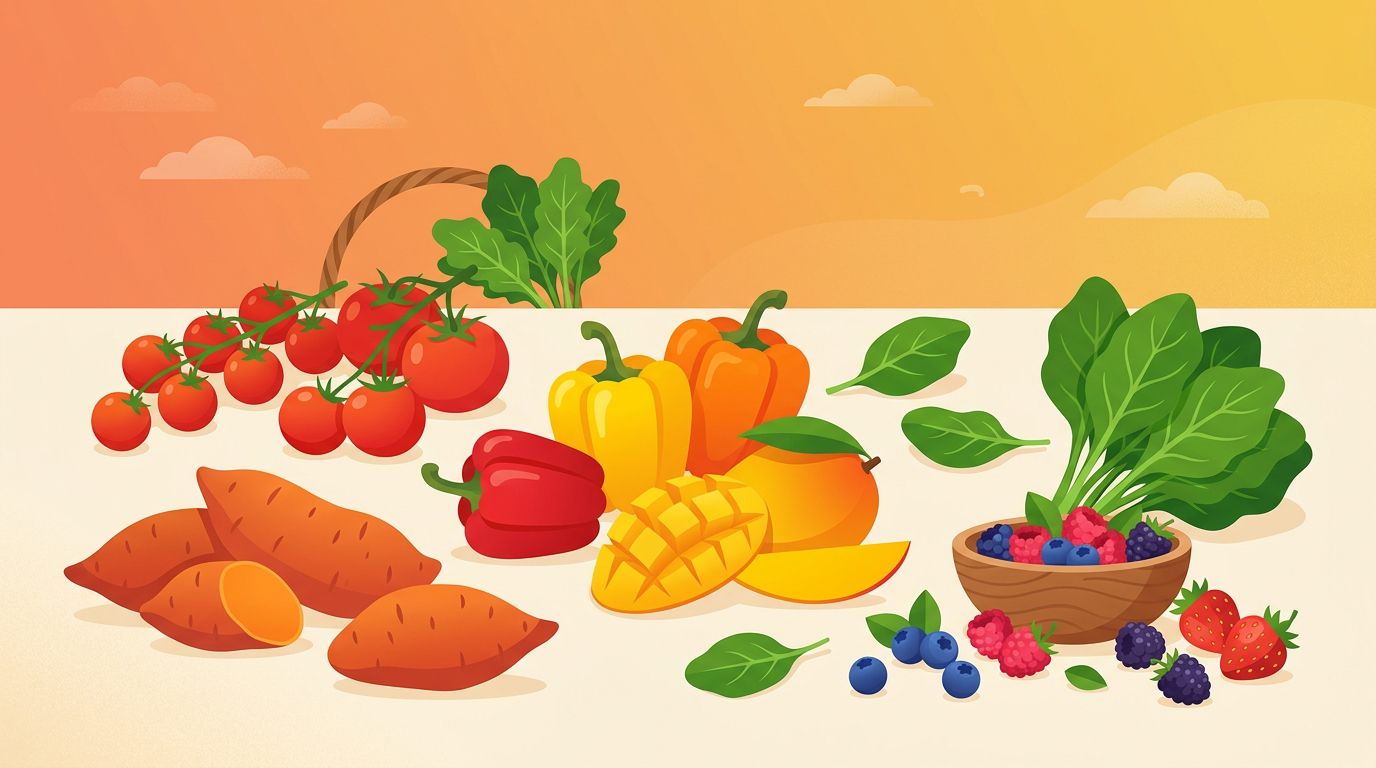
Sweet potatoes: Even more powerful than carrots. One medium sweet potato contains nearly double the beta-carotene. Baked, mashed, or turned into fries, sweet potatoes should be a staple in your tanning diet. They are cheap, filling, and ridiculously versatile.
Cantaloupe: Almost as much beta-carotene as carrots, but it tastes like dessert. Perfect summer snack. Half a cantaloupe is a massive beta-carotene dose that you will actually enjoy eating every day.
Apricots: The underrated beta-carotene bomb. Fresh apricots are amazing when in season, and dried apricots work year-round. Keep a bag in your backpack for an easy tan-boosting snack anytime. Three or four dried apricots is a solid daily dose.
Mango: A beta-carotene and vitamin C powerhouse wrapped in the most delicious tropical fruit. Fresh mango is incredible on its own, in smoothies, or as salsa. Frozen mango chunks work just as well and are available year-round for way less money.
Goji berries: One of the highest carotenoid concentrations of any fruit on the planet. They are pricey, but a small handful per day goes a long way. Toss them into yogurt, smoothies, or trail mix. Think of them as a concentrated carotenoid supplement that happens to be food.
Lycopene Foods: The Tan Protectors
Lycopene is a specific type of carotenoid that does double duty: it adds warmth to your skin tone AND protects your skin cells from UV damage.
Tomatoes: A study published in the British Journal of Dermatology found that eating tomato paste daily for 10 weeks reduced UV skin damage by up to 33%. That is significant. The key detail: cooked tomatoes have way more bioavailable lycopene than raw ones. Marinara sauce, tomato soup, roasted tomatoes, pizza sauce. All of them count. A cup of marinara has roughly 5x more usable lycopene than a raw tomato. Cook your tomatoes, people.
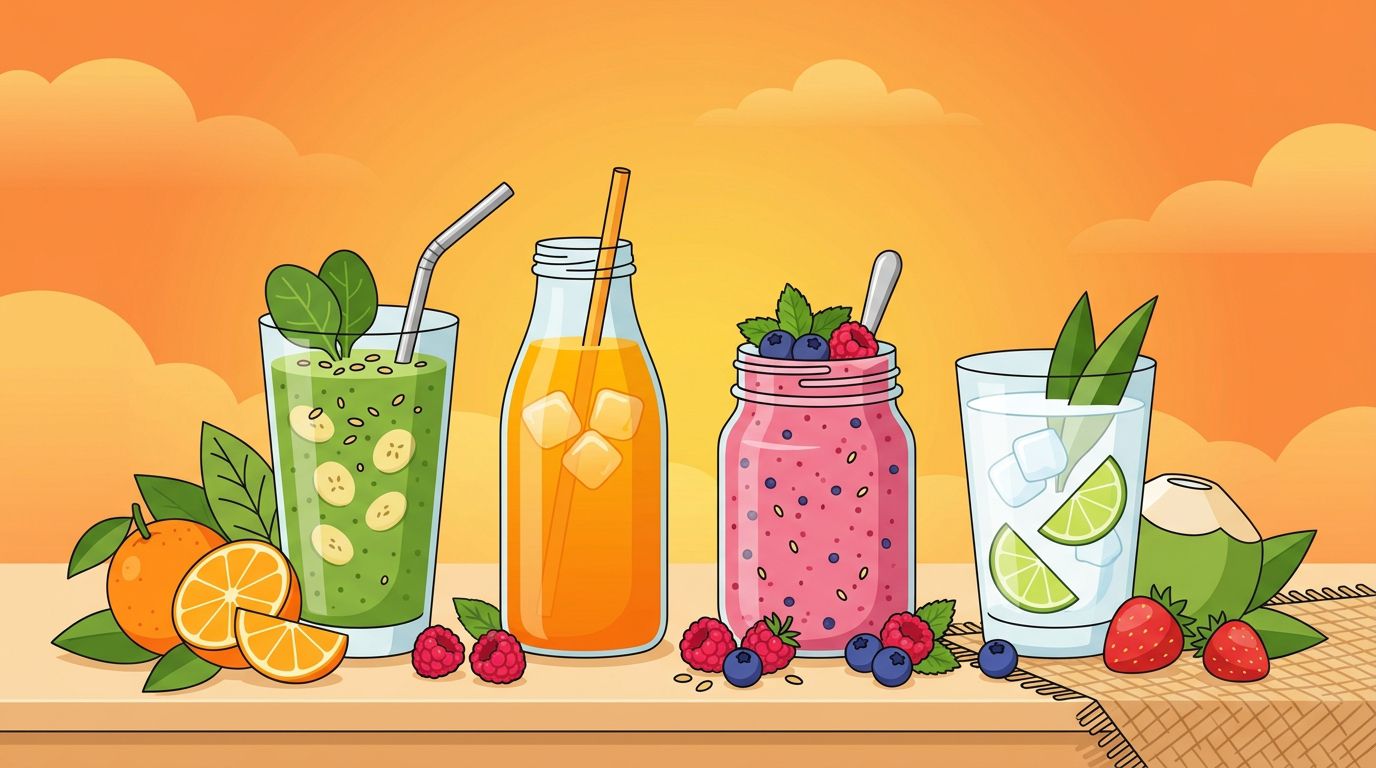
Watermelon: Even more lycopene per serving than tomatoes, plus it is 92% water so you are hydrating while you eat it. During tanning season, watermelon should basically be its own food group. Keep cut watermelon in your fridge at all times. It is the ultimate tan-boosting snack. See our best drinks for tanning for watermelon-based drink ideas.
Bell peppers: Especially red and orange ones. They contain both lycopene AND beta-carotene, making them a two-for-one deal. Raw in salads, roasted on sheet pans, stuffed with rice and cheese. Any way you eat them, you are feeding your tan.
Omega-3 Foods: The Skin Hydrators
Salmon: The king of omega-3s. These healthy fats keep your skin hydrated from the inside out, which is critical for tanning. Dry, dehydrated skin reflects UV and tans unevenly. Well-hydrated skin absorbs UV more efficiently and produces melanin more evenly. Aim for salmon twice a week during tanning season. Baked, grilled, in tacos, in poke bowls. However you like it. Check out our 7-day tanning meal plan for easy salmon recipes.
Not a salmon person? Walnuts, chia seeds, flaxseed, and sardines are all solid omega-3 alternatives. A tablespoon of chia seeds in your morning smoothie does the job.
Vitamin E Foods: The Skin Repairers
Spinach: The triple threat. Spinach delivers beta-carotene, vitamin E, AND iron all in one handful. It is mild enough to throw into smoothies without changing the taste, and it wilts down to almost nothing in stir-fries and omelets. Keep a bag of fresh or frozen spinach in your kitchen at all times during tanning season.
Papaya: Vitamin E, vitamin C, and beta-carotene all in one tropical fruit. Papaya is incredible in smoothies, fruit bowls, or just cut up and eaten fresh with a squeeze of lime. It supports skin repair after UV exposure while adding to your carotenoid glow. If you can find it at your grocery store, add it to your rotation.
What to Realistically Expect
Let us set honest expectations so you are not disappointed. The carotenoid glow from food takes 3-4 weeks of consistent eating to become visible. You will not eat a mango on Monday and look tan by Friday. This is a gradual, cumulative effect that builds over time.
Subtle changes appear first in your palms and face around weeks 2-3. Full visible effect hits around weeks 4-6. If you stop eating these foods, the glow fades over 2-3 weeks as the carotenoids cycle out of your skin cells.
These foods will not replace sun exposure for a traditional tan. The carotenoid glow is a warm, golden undertone. A sun tan is melanin darkening. They are different things. But together? They create a color that is richer, more dimensional, and more natural-looking than either one alone. The combination is genuinely stunning. People will ask you where you went on vacation.
Start eating these foods 3-4 weeks before tanning season begins. That way, your carotenoid glow is already building when you start your first UV sessions, and the two effects stack from day one.
The Quick Shopping List
Next time you hit the grocery store, grab these: carrots, sweet potatoes, mangoes (fresh or frozen), cantaloupe, tomatoes, watermelon, bell peppers (red and orange), spinach, salmon, and almonds. That covers all the major groups. Add dried apricots and goji berries if your budget allows. Total cost for a week of tan-boosting food is under $30-40 on top of what you already spend on groceries.
For a full day-by-day eating plan, check out our complete 7-day tanning meal plan. And for information on melanin-specific nutrients like copper and vitamin A, read our melanin-boosting foods guide. For the full science behind how nutrition supports your skin, see our nutrition for a healthy tan guide.
Safety note: Food supplements your tan beautifully, but it does not replace sun protection. Always wear SPF 30 minimum when tanning outdoors. Eating carotenoid-rich foods does not make your skin resistant to UV damage. TanAI helps you combine smart nutrition with safe tanning for the best possible glow.
Learn more: Do Carrots Help You Tan? | Best Drinks for Tanning | Vitamin D Calculator