Timing Is Literally Everything
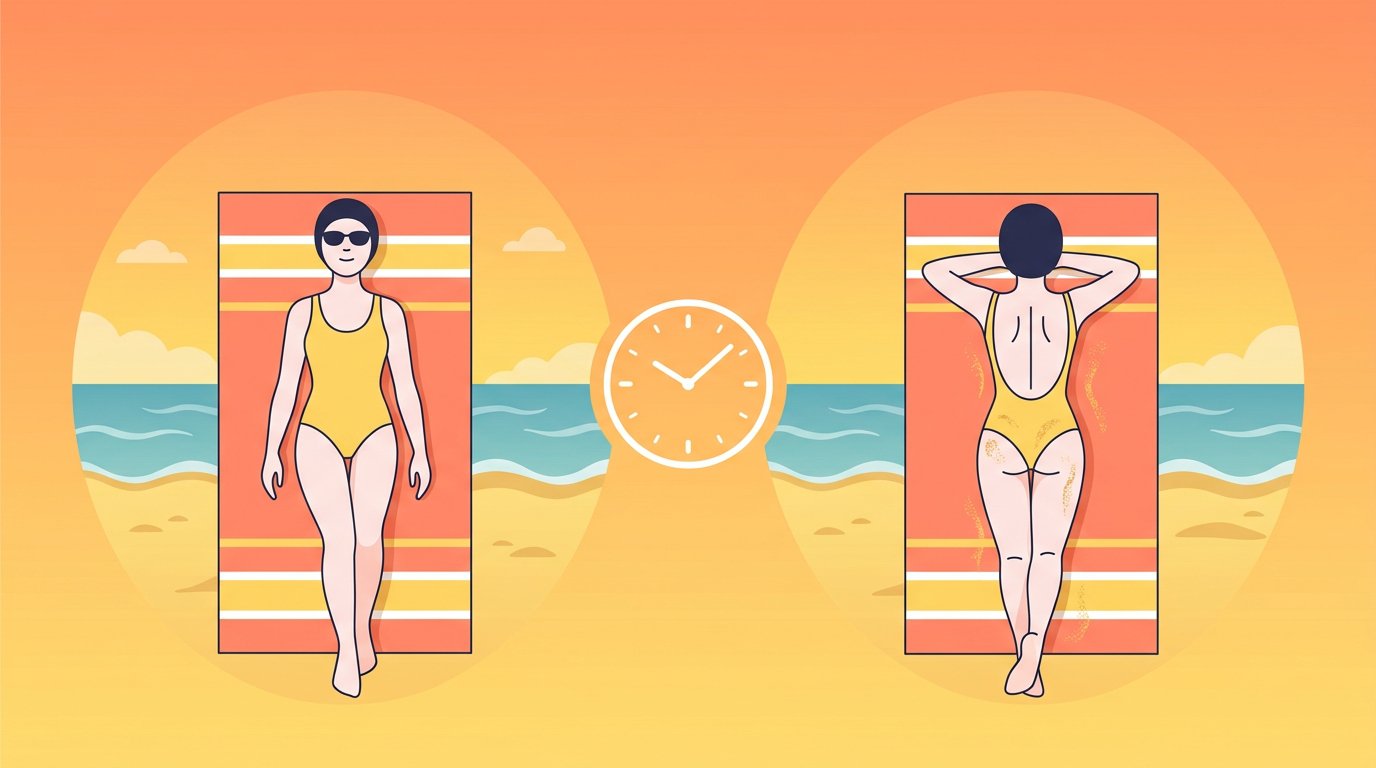
You could do everything else right. Perfect SPF, exfoliated skin, tan-boosting smoothie in hand. But if you are tanning at the wrong time of day for your skin type, you are either wasting your time or setting yourself up for a burn. The same exact spot in your backyard gives completely different results at 9 AM versus noon versus 4 PM. And once you understand how UV changes throughout the day, you can pick the window that gives you maximum color with minimum risk.
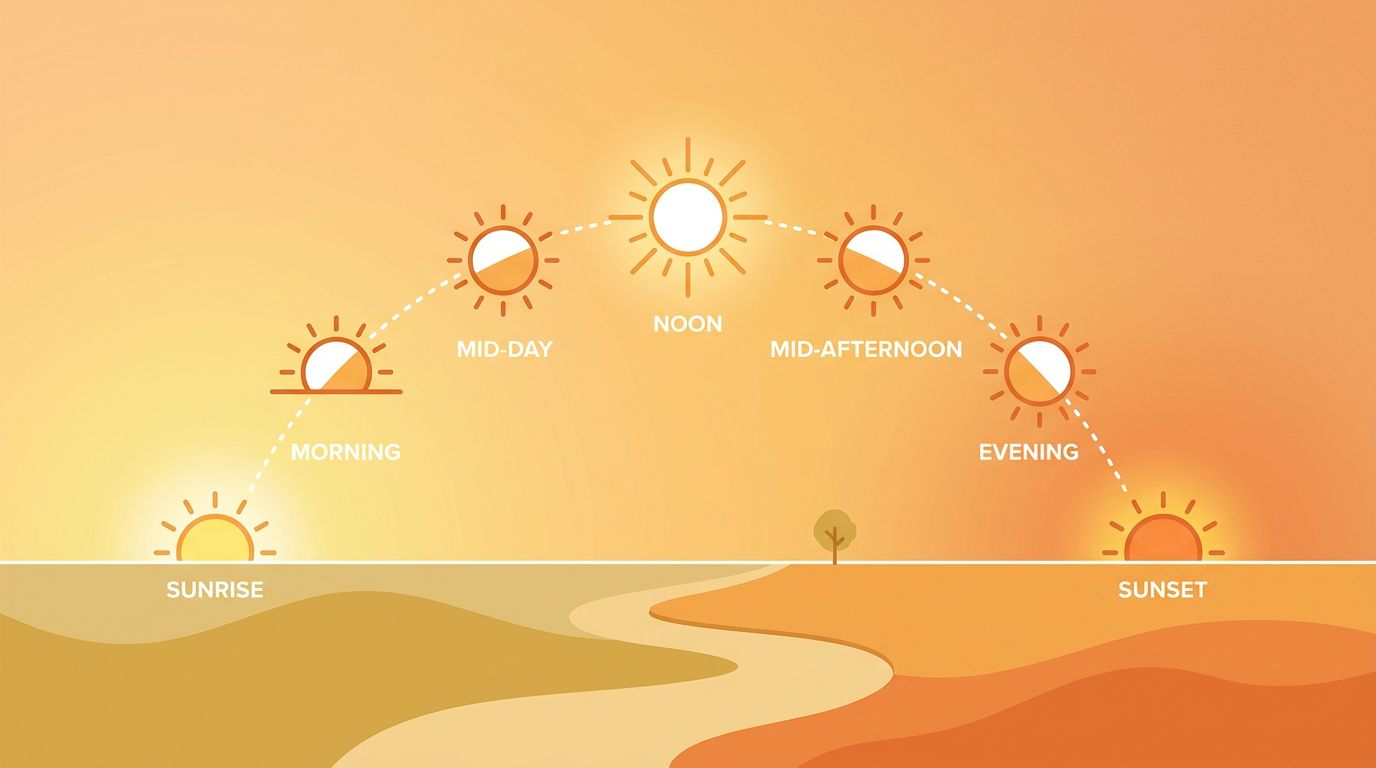
Think of the sun like a dimmer switch. It starts low in the morning, cranks up to full blast around midday, then gradually dials back down by evening. Your job is to find the sweet spot on that dial where the UV is strong enough to tan but gentle enough that you are not frying.
Morning Tanning: Before 10 AM
UV typically: 2-4
Morning tanning is the gentle introduction your skin did not know it needed. Between 7 and 10 AM, UV levels are climbing from basically nothing to a moderate level. This window is perfect for fair-skinned people, beginners, and anyone building a base tan early in the season.
The burn risk during morning hours is significantly lower. You can have longer, more relaxed sessions (25-50 minutes per side depending on your skin type) without constantly worrying about overdoing it. The light is also softer and warmer during these hours, which a lot of people find way more enjoyable than the harsh midday glare.
The downside? It takes more sessions to see results. If you are impatient and want color fast, morning-only tanning means you need to be consistent for a couple of weeks before you see real progress. But the tan you build from morning sessions tends to be more even and longer-lasting because you never damaged your skin getting there.
Morning tanning is especially smart if you burn easily. You get the UV stimulation your melanocytes need without the intensity that causes burns. Many regular tanners who have been doing this for years swear by morning sessions as their favorite window. Check out our beginner tanning schedule for a full weekly plan using morning sessions.
Midday Tanning: 10 AM to 2 PM
UV typically: 6-10+
This is the nuclear option. Midday is when UV intensity peaks hard, especially during summer months. We are talking UV 8, 9, sometimes 10+ in southern locations. Your skin produces melanin fastest during these hours, which means you get visible results in shorter sessions.
But here is the thing most people do not want to hear: midday tanning is only for experienced tanners with medium to dark skin who already have a base tan. If you are fair, new to tanning, or do not have a base, midday UV will burn you before it tans you. A burn is not a tan-in-progress. It is skin damage that will peel off and leave you paler than you started.
If you do tan at midday, keep sessions short. We are talking 10-20 minutes per side maximum. SPF 30 is the absolute minimum, and SPF 50 on your face is non-negotiable. Set a timer because it is so easy to lose track when you are comfortable. One wrong move during UV 7-8 and you are dealing with a burn that takes days to recover from.
The heat is also intense during these hours. Dehydration, headaches, and heat exhaustion are real risks. Bring water. Lots of it.
Afternoon Tanning: 2 PM to 5 PM
UV typically: 4-6, dropping as the afternoon goes on
This is the sweet spot for most people and the window we recommend the most. Afternoon UV is still strong enough to give you real results. We are talking about 70-80% of midday effectiveness but with significantly less burn risk. You get the best of both worlds.
Sessions of 15-30 minutes per side work beautifully during this window. The UV is high enough that you are not wasting your time, but gentle enough that you have a much bigger margin of error. If you accidentally stay out 5 minutes too long, you are probably fine. Try that at midday and you might regret it.
Many experienced tanners say 3-4 PM is the perfect tanning hour. UV is typically around 4-5, which is strong enough for melanin production across all skin types. The light has a gorgeous warm, golden quality during these hours that makes the whole experience more pleasant. And the temperature is usually more comfortable than the peak midday heat.
Afternoon tanning also fits real life better. If you have school, work, or morning commitments, you can still catch a quality session in the afternoon. It does not require waking up early or rearranging your whole day. It is the after-school tanning routine that actually works.
Hour-by-Hour UV Pattern: Typical Summer Day
Here is what UV looks like across a full day so you can plan your sessions with precision. These numbers are typical for a mid-latitude US location (think New York, Chicago, Denver) during June or July:
7 AM: UV 1-2. Barely tanning territory. Great for a walk but not efficient for a session.
8 AM: UV 2-3. Tanning begins for dark skin types. Fair skin needs longer.
9 AM: UV 3-5. Real tanning starts here. Good morning window.
10 AM: UV 5-7. UV climbing fast. Transition zone into peak hours.
11 AM: UV 7-9. Getting intense. Short sessions only.
12 PM (noon): UV 8-10. Peak intensity. Maximum melanin production but maximum risk.
1 PM: UV 8-10. Still at or near peak. Same caution as noon.
2 PM: UV 6-8. Starting to drop. Still strong but more manageable.
3 PM: UV 5-7. Sweet spot zone opens. Great for most skin types.
4 PM: UV 3-5. Solid tanning UV with low burn risk. The golden hour begins.
5 PM: UV 2-3. Last call for effective tanning. Fine for dark skin, slow for fair.
6 PM: UV 1-2. Basically done for the day. Enjoy the sunset though.
TanAI gives you your area's actual UV pattern in real time, so you never have to guess based on averages.
Seasonal Differences That Change Everything
The hour-by-hour pattern above shifts dramatically with the seasons. You cannot use your summer timing in March and expect the same results.
Summer (June-August): The widest tanning window of the year. UV is above 3 from roughly 9 AM to 5 PM, giving you an 8-hour window to work with. Afternoon tanning makes the most sense to avoid extreme midday heat while still getting strong UV. This is peak tanning season for a reason.
Spring (March-May): UV is building but not at full strength yet. Midday is your best bet, especially in April and May when UV can reach 5-7 around noon. Morning and late afternoon UV may be too low for efficient tanning in March. See our April tanning guide for specifics.
Fall (September-November): UV is declining. September still has decent afternoon UV (4-6), but by November you are looking at UV 2-3 at best, midday only. Sessions need to be longer and more targeted.
Winter (December-February): In most of the US and Europe, UV rarely exceeds 3. Midday on a clear day is your only realistic shot, and even then results are slow. This is when winter tanning strategies and self-tanner become your best friends.
Quick Decision Guide by Skin Type
Do not have time to read all that? Here is your cheat sheet:
Fair skin, burns easily: Morning (8-10 AM) or late afternoon (3-5 PM). Never midday without a solid base tan. SPF 30-50 always.
Medium skin, tans gradually: Afternoon (2-4 PM) is your ideal window. Can handle midday if you have a base. SPF 30 minimum.
Dark skin, tans easily: You have the most flexibility. Midday gives fastest results. Afternoon works great too. Still use SPF 30. Even dark skin can burn and suffer UV damage.
Still unsure? Check our per-side timing guide for exact minutes based on your skin type and UV level. Or let TanAI calculate it for you automatically based on your location and skin profile.
Safety note: UV exposure carries risks including sunburn, premature aging, and increased skin cancer risk. Always use SPF 30 minimum, limit session times, and never fall asleep in the sun. If you notice any unusual moles or skin changes, see a dermatologist. TanAI is designed to help you make smarter tanning choices, not to replace medical advice.
Our tanning calculator tells you the exact best window for your skin type and location today — no more guessing which hour to head outside.
Learn more: Best UV Index for Tanning | How to Tan Without Burning